Sunrise, Cows, and 40,000 Strangers: Inside America's Oddly Soothing Farm Stream Obsession
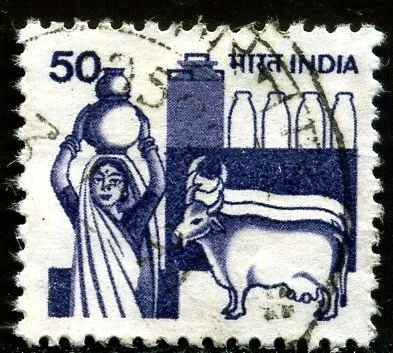
Photo: Post of India, GODL-India, via Wikimedia Commons
It's 5:47 a.m. in central Wisconsin, and Sarah Kowalski has already been awake for an hour. Her Holsteins are lining up at the parlor, the sun is barely pushing through the mist over the pasture, and somewhere out there, 38,000 people are watching her do it.
"Good morning, chat," she says to a camera bolted to a rafter above the milking parlor. "Bessie's still limping a little, we'll check her after. And yes, Kevin from Ohio, the creamery pickup is today."
Welcome to the strange, wonderful, deeply American world of live farm streaming — the agricultural answer to slow TV, and arguably the most wholesome corner of the internet.
The Stream That Started in a Milking Parlor
Farm livestreaming didn't come out of nowhere. The Slow TV movement — think Norway's seven-hour broadcast of a train ride from Bergen to Oslo, or the nine-day ferry voyage that had a third of the country glued to their screens — proved that audiences crave unhurried, real-time glimpses of ordinary life. American farmers, many of them younger growers who grew up on YouTube, started bolting GoPros to tractors and pointing webcams at chicken coops.
What happened next surprised everyone. Harvest watch-alongs during the fall combine runs in Iowa and Kansas now pull six-figure audiences. A Kentucky cattle rancher I spoke with — who asked to go by "Doc" because, as he put it, "my extension agent still doesn't believe any of this" — streams his 6 a.m. fence checks to a loyal crew of night-shift nurses, insomniacs, and one extremely devoted fan in Portugal.
"They're not here for me," Doc laughs. "They're here because nothing on the news is happening in my pasture. A cow might have a calf. The creek might rise. That's the drama."
Why We Can't Look Away
Talk to the viewers and a pattern emerges. They're not tuning in for spectacle — they're tuning in for proof.
Megan Torres, a 34-year-old accountant in suburban Atlanta, started watching a Vermont dairy stream during the pandemic and never stopped. "I buy milk at the grocery store like everybody else," she says. "But now I know what the cow looks like. I know the farmer's dog's name. When I see 'dairy' on a label, I'm not guessing anymore. I've seen it."
That's the thing about watching food production happen live: you can't edit a livestream. There's no stylized commercial, no idyllic stock photo of a red barn. There's just mud, manure, weather delays, and the unglamorous, repetitive beauty of actual work. For a public that's spent two decades marinating in food-safety scares and greenwashed marketing, that rawness reads as honesty.
Farm broadcasters have noticed the shift. "People ask me about antibiotics, about what the chickens eat, about whether the eggs are washed," says one Virginia egg farmer who streams her morning collection routine. "I just answer. I don't have to spin anything. The camera's already spinning for me — it's just pointed at the truth."
Transparency as a Business Model
Here's where it gets interesting economically. Many of these streamers have turned viewers into customers. The Vermont dairy sells cheese to chat regulars. Doc's beef halves sell out every season — mostly to people who watched those exact steers grow. It's community-supported agriculture with a face, a voice, and a running commentary about the weather.
And the audiences are surprisingly young. Platform analytics shared with me show farm-stream viewers skewing heavily 18–34, a demographic that food marketers have been chasing for a decade. They don't want a commercial. They want a relationship. They want to watch the corn get planted and then, months later, watch it come out of the hopper, and feel like they were there for the whole story.
The Sunrise Is the Same Every Day. That's the Point.
There's a temptation to call this trend a novelty, a quirky internet footnote. But I think it's something bigger. At a moment when Americans trust institutions less and less, a farmer named Sarah saying good morning to 38,000 strangers while her cows file into the parlor is doing something radical: she's letting people watch.
No filter. No script. Just the milk, the mud, and the sunrise.
Turns out, that's must-see TV.