Jar Magic: 9 Fermentation and Preservation Techniques Every Homesteader Should Know
There's a particular kind of late-summer panic that anyone who grows food knows well. The zucchini that was manageable on Monday is a crisis by Friday. The tomatoes are all ripening at once. The cucumbers have staged a hostile takeover of the back corner of the garden. And the farmers market table is groaning under the weight of more peppers than any household could eat in a month.
For most of human history, the answer to this problem wasn't a bigger fridge. It was fermentation, pickling, curing, and drying — techniques developed over thousands of years specifically to solve the feast-and-famine rhythm of seasonal food production. These methods are having a genuine revival right now, driven partly by homesteaders and sustainable food enthusiasts who are rediscovering that preservation isn't just practical — it's one of the most direct ways to build a real, year-round relationship with your food.
Here are nine methods worth knowing, from the beginner-friendly to the more involved, with enough to get you started on each one.
1. Lacto-Fermentation: The Gateway Technique
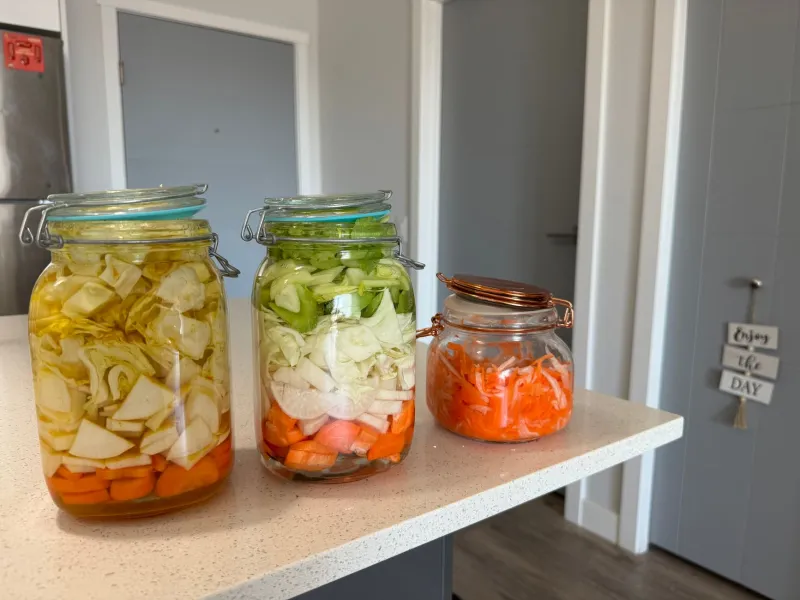
If you've ever eaten real sauerkraut or traditional dill pickles — not the vinegar-brined kind from the store, but the genuinely funky, probiotic kind — you've had lacto-fermented food. The process is almost comically simple: pack vegetables tightly into a jar, submerge them in a brine of salt and water, and let naturally occurring Lactobacillus bacteria do the rest.
Try it first with: Shredded cabbage (sauerkraut), sliced cucumbers, or whole green beans (dilly beans). Use non-iodized salt — iodine inhibits fermentation — at roughly 2% of the weight of your vegetables. Keep everything submerged below the brine, and taste after five to seven days at room temperature before moving to the fridge.
The result keeps for months in cold storage and gets more complex in flavor over time.
2. Vinegar Pickling for Quick Preservation
Unlike lacto-fermentation, vinegar pickling uses acidity rather than live cultures to preserve food. It's faster, more shelf-stable when properly canned, and more predictable for beginners. The trade-off is that you lose the probiotic benefits, but you gain flexibility — vinegar pickles work with an enormous range of vegetables and can be flavored endlessly.
Basic ratio: 1 cup water, 1 cup white or apple cider vinegar, 1 tablespoon salt, 1 tablespoon sugar (optional). Bring to a boil, pour over packed vegetables in sterilized jars, and process in a water bath canner for shelf stability or simply refrigerate for quick pickles that'll last a month.
Pickled red onions, bread-and-butter zucchini chips, and spicy pickled carrots are crowd favorites that disappear fast.
3. Fermented Hot Sauce
This one has become almost a homestead rite of passage. If you've got a surplus of hot peppers — and if you grow them, you always do — lacto-fermented hot sauce is one of the best things you can make. Blend or roughly chop peppers, pack into a jar with 2% brine, ferment for one to two weeks, then blend smooth with a splash of apple cider vinegar and strain if desired.
The fermentation adds depth that vinegar-only hot sauces can't replicate. It's also wildly customizable — add garlic, carrots, mango, whatever you've got too much of.
4. Dehydrating: The Most Forgiving Method
A food dehydrator is one of the highest-value pieces of equipment a homesteader can own. Dried herbs, fruit leathers, vegetable chips, jerky, dried mushrooms — the range of what you can do with consistent low heat and airflow is enormous.
For herbs, dry at around 95°F until crumbly (usually 2 to 4 hours). For tomatoes, slice thin, dry at 135°F for 8 to 12 hours, and you've got concentrated flavor bombs that last all winter. No dehydrator? A conventional oven on its lowest setting with the door cracked works in a pinch, though it uses more energy.
Properly dried and stored in airtight containers, most dehydrated foods last one to two years.
5. Salt-Packing Herbs and Greens
This one flies under the radar but deserves more attention. Packing fresh herbs in salt — basil, parsley, chives, even arugula — preserves their flavor in a way that drying simply doesn't match for certain varieties. Layer clean, dry herbs with coarse kosher or sea salt in a jar, pressing down to eliminate air pockets.
The result is intensely flavored, slightly salty herbs that work beautifully in cooked dishes all winter. Rinse before using and account for the salt in your recipe. Salt-packed basil, in particular, holds its color and flavor in a way that dried basil never does.
6. Kvass and Fermented Beverages
Beet kvass is a traditional Eastern European fermented drink that's finding new fans in the American homesteading community, partly because it's so easy and partly because the health claims around it — however overstated in some corners of the internet — have driven curiosity. Cube raw beets, pack into a jar, cover with salted water, and ferment at room temperature for two to four days.
The result is earthy, slightly sour, deeply colored, and genuinely interesting. It's not for everyone, but it's a great gateway into understanding how fermentation transforms flavor. The same basic principle applies to water kefir, jun tea, and other naturally carbonated drinks that homesteaders have been reviving.
7. Freezer Preservation Done Right
Freezing gets overlooked in conversations about preservation because it feels too obvious, but most people do it wrong. The key to quality frozen vegetables is blanching — briefly boiling or steaming before freezing — which deactivates the enzymes that cause flavor and texture degradation over time.
Blanch green beans for 3 minutes, corn for 4 minutes, broccoli for 3 minutes. Plunge immediately into ice water, drain thoroughly, spread on a sheet pan to freeze individually before bagging. Vegetables frozen this way hold their quality for 10 to 12 months, versus the mushy, flavor-stripped results most people get from skipping the blanching step.
8. Infused Vinegars and Oils
This is where preservation meets pantry luxury. Herb-infused vinegars — tarragon, rosemary, garlic-dill — capture summer flavors in a form that lasts indefinitely and makes a gorgeous base for vinaigrettes and marinades all year. Simply pack herbs into a clean bottle, cover with warm vinegar (white wine and apple cider work beautifully), and steep for two to four weeks.
A note on infused oils: they require more care. Garlic-in-oil is a well-documented botulism risk if stored at room temperature. Infused oils should be made fresh, refrigerated, and used within a week — or made with dried herbs rather than fresh to reduce moisture.
9. Kimchi and Cultured Vegetable Blends
Kimchi has gone from specialty Korean grocery staple to farmers market fixture across the US, and for good reason. It's lacto-fermentation at its most flavorful — a whole-vegetable ferment built around cabbage, daikon, scallions, garlic, ginger, and gochugaru (Korean red pepper flakes) that transforms an autumn harvest into something that gets better with every week it sits in the fridge.
You don't have to follow a traditional recipe exactly to make something delicious. The framework — salted and rinsed vegetables, spiced paste, packed tight and left to ferment — works with a remarkable range of produce. Kohlrabi kimchi, turnip kimchi, and green tomato kimchi are all popular variations in the American homesteading community.
The Bigger Point
Every jar you fill, every batch you ferment, every herb you pack in salt is a small act of resistance against the disposability built into our modern food system. The average American household wastes nearly a third of the food it buys. Preservation techniques don't just solve the harvest surplus problem — they fundamentally reframe your relationship with food as something valuable enough to protect and extend.
That's been the homesteader's philosophy for generations. And right now, in kitchens across the country, it's looking less like nostalgia and more like wisdom.