What's Living in Your Dirt? A Beginner's Guide to the Soil Ecosystem Under Your Feet
Here's a number that tends to stop people in their tracks: a single teaspoon of healthy garden soil contains more living organisms than there are people on Earth. Bacteria, fungi, protozoa, nematodes, arthropods — a whole civilization operating just below the surface of your raised beds, your backyard plot, or that strip of dirt alongside your fence where you keep meaning to grow something.
Most of us were taught to think of soil as a growing medium — the stuff that holds plant roots in place while we pour nutrients onto it. That mental model has led to a lot of bad gardening habits and, at a larger scale, to agricultural practices that have stripped the life out of millions of acres of American farmland. The better mental model? Soil is an ecosystem. And like any ecosystem, its health determines everything that grows in it — including the food you eat.
The Players You Need to Know
You don't need a microbiology degree to work with your soil biology. But knowing the main characters helps.
Bacteria are the most abundant organisms in soil and serve as the foundation of most nutrient cycles. Different bacterial communities break down organic matter, fix atmospheric nitrogen into plant-available forms, and suppress disease-causing pathogens. When you add compost to your garden, you're largely feeding and diversifying your bacterial community.
Fungi do something bacteria can't: they build physical infrastructure. Fungal hyphae — threadlike filaments — extend through soil in networks that can span acres, connecting plant roots, transporting water and nutrients, and communicating chemical signals between plants. The mycorrhizal fungi that colonize plant roots are particularly important. In exchange for sugars from the plant, they dramatically extend the plant's effective root system, sometimes by a factor of 100 or more. A tomato plant with healthy mycorrhizal partnerships accesses water and phosphorus from zones its roots could never reach alone.
Protozoa are single-celled organisms that feed on bacteria. This sounds destructive, but it's actually essential: when protozoa consume bacteria, they release nitrogen in forms plants can use directly. They're basically a slow-release fertilizer mechanism built into the soil food web.
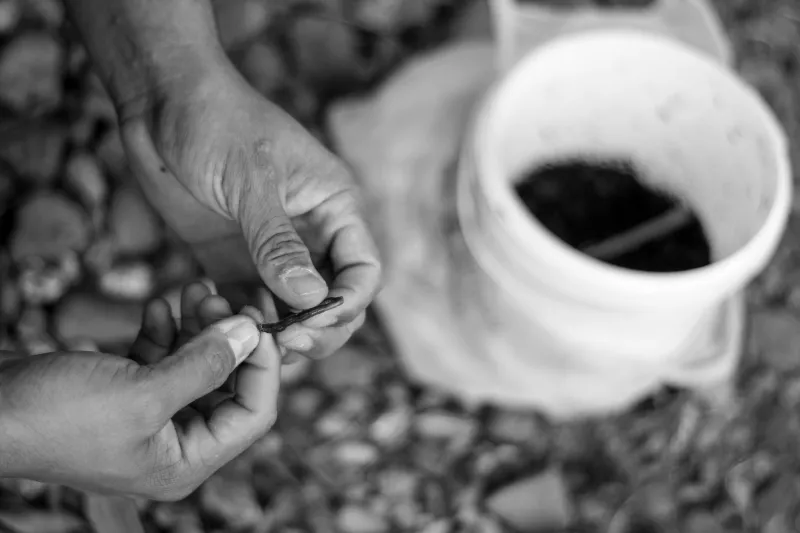
Earthworms are the most visible members of the crew and the ones most gardeners already appreciate. Their burrowing aerates soil, their castings are extraordinarily nutrient-dense, and their movement physically mixes organic material through the soil profile. The presence of abundant earthworms is one of the best quick indicators of overall soil health.
Why Modern Lawns and Gardens Kill This System
Conventional lawn care and gardening practices are, bluntly, hostile to soil life. Synthetic nitrogen fertilizers feed plants directly but bypass the microbial community entirely — and some research suggests high nitrogen inputs actually reduce fungal diversity over time. Broad-spectrum pesticides kill the target pest but also knock out beneficial insects, predatory soil organisms, and the microbial life that keeps pathogens in check.
Tilling is the big one. Every time you turn your soil with a rototiller or even a hard-working shovel, you're shredding fungal networks that took months or years to establish. Those mycorrhizal highways get severed. The physical structure of the soil — the aggregates held together by fungal threads and bacterial biofilms — collapses into a fine, compaction-prone powder.
This doesn't mean you can never dig in your garden. It means understanding that disturbance has a cost, and minimizing unnecessary tillage is one of the highest-return changes most home gardeners can make.
Testing What You've Got
Before you start amending or changing your approach, it helps to know where you're starting from. Soil testing has gotten genuinely accessible in recent years.
The most practical starting point is a basic soil test through your state's cooperative extension service — most land-grant universities offer them for $15 to $30 and they'll give you pH, macronutrient levels, and organic matter percentage. That last number is the one to focus on for soil health purposes. Conventional agricultural soils in the Midwest have lost roughly half their original organic matter over the last century. Most suburban soils are starting from an even lower baseline. Getting that number moving upward is a multi-year project, but every tenth of a percent matters.
For a more hands-on biological assessment, try the jar test: fill a jar with soil and water, shake it, and let it settle over 24 to 48 hours. The layers that form tell you about your soil's composition — sand settles first, then silt, then clay, with organic matter floating on top. A thick organic layer is a good sign.
The slake test is even simpler: drop a dry clump of your soil into a jar of water and watch what happens. Healthy soil with good aggregate structure holds together. Degraded soil dissolves almost immediately. It's not scientific, but it's a visceral demonstration of what biological activity does for soil structure.
Practical Ways to Feed Your Underground Allies
The good news is that improving soil biology doesn't require expensive inputs. It mostly requires feeding the organisms already there and getting out of their way.
Compost is foundational. Finished compost adds organic matter, introduces diverse microbial communities, and improves both drainage in clay soils and water retention in sandy ones. A two-inch top-dressing applied each season adds up over years in ways that synthetic fertilizers simply cannot replicate.
Cover crops are one of the most underused tools in the home garden toolkit. Planting a mix of legumes (which fix nitrogen) and grasses or brassicas in fall keeps living roots in the soil through winter, feeding the microbial community year-round rather than leaving beds bare and biologically dormant.
Mulch everything you can. A thick layer of wood chips, straw, or shredded leaves on the soil surface regulates temperature, retains moisture, and feeds fungi as it slowly breaks down. It's essentially a slow-motion compost application.
Stop tilling unless you have to. Transition to no-dig or minimal-dig methods and watch your soil structure improve over two to three seasons. Your back will also appreciate it.
Reduce or eliminate synthetic inputs. This one's harder for gardeners who've relied on them for years, but the transition is worth it. As your soil biology improves, your plants' access to naturally cycling nutrients improves with it.
The Bigger Picture
At Aby Farm Live, we talk a lot about the connection between where food comes from and what it does for you. That connection starts here — in the dirt, literally. The flavor of a tomato, the nutrition in a carrot, the resilience of a plant through a dry August — all of it traces back to what's living in the soil it grew in.
You can't see most of it. But once you start thinking of your garden as an ecosystem you're partnering with rather than a substrate you're managing, everything about how you grow food changes. And usually, it changes for the better.