After Dark and Above the City: How Night Farming Is Quietly Feeding Urban America
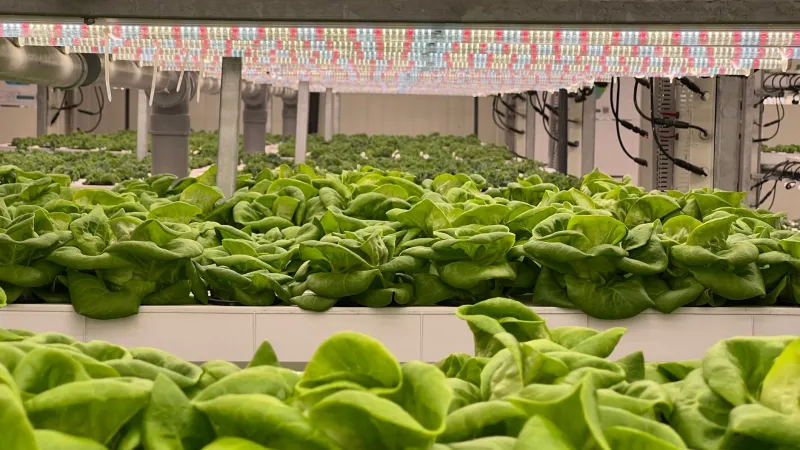
Somewhere in Chicago, a rooftop is glowing at 2 a.m. Not a party, not a film shoot—just rows of butterhead lettuce soaking up pink-purple LED light while the rest of the neighborhood sleeps. A few floors below, someone's alarm is set for 5 a.m. to check moisture levels before their day job starts. This is what farming looks like in 2025 for a lot of city dwellers, and it's weirder, more practical, and more exciting than you might expect.
Nocturnal agriculture—loosely defined as growing food during nighttime hours or in artificially lit environments that operate independent of the sun—has been quietly building momentum across U.S. cities. From repurposed warehouse basements in Detroit to hydroponic towers tucked into Brooklyn apartments, the movement is gaining real traction. And the reasons why make a lot of sense once you dig in.
Why Darkness (or Fake Light) Is Actually an Advantage
Here's the counterintuitive part: plants don't inherently need the sun. They need light, carbon dioxide, water, and nutrients. The sun is just the most convenient and historically the only practical source of that light. Modern LED grow technology has changed that equation significantly.
Full-spectrum LEDs have gotten dramatically more efficient over the past decade. Today's commercial grow lights can deliver exactly the wavelengths plants use for photosynthesis—skipping the parts of sunlight that just generate heat and waste energy. That means growers can dial in light cycles with precision that Mother Nature simply can't offer. Want 18 hours of "daylight" for your basil? Done. Need to trigger a flowering cycle in your strawberries? Adjust the timer.
Night farming in outdoor or semi-outdoor settings takes a slightly different approach. Some urban rooftop growers are using supplemental lighting to extend growing windows into the evening, effectively doubling their productive hours without expanding their footprint. In a city where horizontal space costs a fortune, that's a genuinely big deal.
The Water Math That Changes Everything
One of the less glamorous but critically important arguments for indoor and nighttime growing is water efficiency. Daytime outdoor farming—even in controlled urban settings—loses a significant amount of water to evaporation, especially in the summer heat that blankets cities like Phoenix, Houston, and Los Angeles.
Indoor vertical farms that operate around the clock in climate-controlled environments can use up to 95% less water than conventional field farming, according to figures cited by the Association for Vertical Farming. That's not a rounding error. For cities already grappling with drought conditions and aging water infrastructure, that number is transformative.
Night farming outdoors captures some of that same benefit. Cooler temperatures mean slower evaporation. Irrigation at night allows water to absorb more deeply into growing media before the heat of the day kicks in. It's a simple shift with a real payoff.
Talking to the People Actually Doing This
We connected with a handful of urban growers around the country who've made the switch—or built their whole operation around it.
Marcellus, who runs a small hydroponic operation out of a converted garage in Atlanta, started night farming almost by accident. "I work a nine-to-five, so the only time I had to tend my plants was evenings and early mornings. I just built my light schedules around when I could actually be there." What started as a hobby feeding his family has turned into a small side business supplying a local restaurant with microgreens and herbs three days a week.
In Minneapolis, a collective called Northside Roots operates a basement grow space beneath a community center. They run their lights on a schedule that peaks between 10 p.m. and 6 a.m. to take advantage of lower electricity rates during off-peak hours. "Our utility bill would be brutal if we ran everything during the day," says one of the collective's organizers. "Night cycling isn't just about the plants—it's about keeping the economics workable."
That economic angle comes up again and again. Time-of-use electricity pricing is real in most major U.S. markets, and it's a lever that savvy urban farmers are pulling hard.
The Space Problem, Solved Vertically
Urban land is expensive. Like, really expensive. A rooftop garden in Manhattan or a community plot in San Francisco involves navigating lease agreements, liability insurance, and square footage costs that would make a traditional farmer's head spin.
Night farming, particularly in vertical indoor formats, sidesteps a lot of that. You're not competing for sunlit outdoor space when your grow lights do the work. Basements, parking structures, shipping containers, underutilized commercial kitchens—all of these become viable growing environments when light is decoupled from the sun.
Vertical stacking multiplies that advantage further. A 1,000-square-foot basement with five-tier growing racks effectively becomes 5,000 square feet of growing surface. Stack in 20-hour light cycles and you're producing year-round at a density that outdoor farming can't touch.
Is This Scalable Beyond the City?
Fair question. Right now, most night farming operations are small—hobbyists, micro-businesses, community collectives. The economics of scaling indoor vertical farming to replace meaningful portions of the food supply are still being worked out. Energy costs remain the central challenge, even with more efficient LEDs. A head of lettuce grown in a fully indoor vertical farm still carries a higher production cost than one grown in a California field.
But the gap is narrowing. And the calculus looks different when you factor in transportation costs, food miles, and the carbon footprint of shipping produce across the country. A locally grown head of lettuce that costs a little more to produce but travels five miles instead of 2,000 starts to look like a better deal in a broader accounting.
For American suburbs and small towns, the scalability conversation is genuinely interesting. Backyard greenhouses with supplemental lighting, garage grow rooms, and small-scale hydroponic setups are all within reach for motivated home growers. The technology has come down in price significantly. A decent LED grow light and a basic hydroponic kit can be set up for a few hundred dollars—and the learning curve, while real, is manageable.
What It Means for the Food System
Night farming won't replace conventional agriculture. That's not the point. But as one piece of a more distributed, resilient food system, it's a compelling piece. It brings production closer to consumers. It reduces dependence on long supply chains that, as we've all seen, can break in unexpected ways. It makes fresh produce accessible year-round in climates where outdoor growing is a seasonal affair.
There's also something worth naming about who gets to participate. Community-based night farming operations in urban neighborhoods—like Northside Roots in Minneapolis—are putting fresh food production in the hands of communities that have historically been underserved by the conventional food system. That's not a small thing.
The midnight harvest isn't a gimmick. It's a genuine rethinking of when, where, and how food gets grown—and for a lot of urban Americans, it's already happening right now, one glowing rooftop at a time.