The $90 Entrée Was Never the Point: Farm-to-Table Needs a Sequel
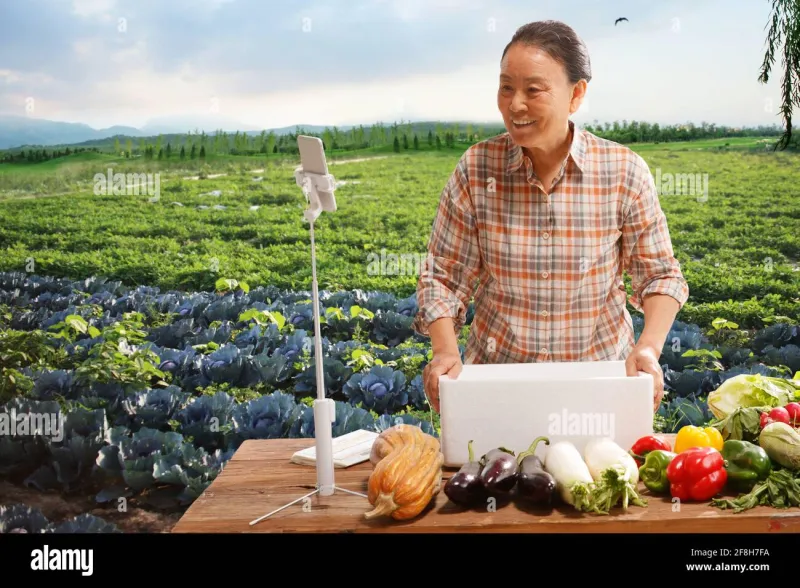
Photo: smartphone livestreaming farm field vegetables farmer direct-to-consumer delivery boxes, via c8.alamy.com
Let's say the quiet part out loud: farm-to-table, as most Americans have experienced it, is a luxury good.
The movement that was supposed to reconnect us with our food — the heirloom tomatoes, the heritage pork, the menu that lists the farm where your beets grew — ended up, in practice, as a way for urban restaurants to charge $38 for a salad. The beets are wonderful. The story is wonderful. The price tag is a wall.
I love a good farm dinner as much as anyone. But we should be honest about who's been invited to the table. According to data from the Bureau of Labor Statistics, the average American household spends roughly $65 per person per week on all food eaten at home. A single farm-to-table entrée can eat that whole budget and ask for a tip. When the movement's flagship experience costs more than a week of groceries, it's not a movement anymore. It's a membership club with nice lighting.
How We Got Here
Farm-to-table started as a rebellion. In the 1970s and 2000s, chefs like Alice Waters made a genuinely radical argument: food should be local, seasonal, and traceable, and industrial agriculture's long supply chains were stripping flavor and fairness out of the system. That argument was correct. It still is.
But the model that carried it — the white-tablecloth restaurant as intermediary — came with the intermediary's margins. Farm-to-table restaurants needed to charge fine-dining prices to cover fine-dining overhead, and the movement's image calcified accordingly: linen napkins, tasting menus, a $14 side of carrots. The idea got democratized in the language; the practice got priced for the top decile.
Meanwhile, the actual farms — the ones the movement was supposedly built around — captured only a fraction of the premium. Studies of restaurant supply chains consistently show that growers receive a small share of the final menu price. The farmer got the story credit. The restaurant got the margin.
Enter Farm-to-Screen
Here's why I think the next chapter is already being written, and it doesn't have a maître d'.
Call it farm-to-screen: a sprawling, messy, wonderfully accessible ecosystem where the connection between eater and grower happens without the $90 checkpoint in the middle.
Look at what's actually working right now:
Live farm streams. Thousands of Americans wake up to watch dairy parlors and combine harvests in real time. Transparency isn't a menu description anymore — it's a webcam. You can't greenwash a livestream.
Virtual farm shares. CSAs were always the most democratic tool in the shed, but they've been supercharged by subscription platforms, payment plans, and workplace drop-offs. A family can now buy into a farm for less than the cost of two nice dinners out — and eat from it for five months.
Direct-to-door subscriptions. Meat, dairy, produce, and pantry staples shipped straight from regenerative farms to porches in every state. The farm captures the retail margin instead of splitting it with a distributor and a dining room.
Social-native farm marketing. Farmers on TikTok and YouTube aren't just selling products; they're building parasocial trust at a scale no restaurant menu could ever achieve. When the farmer is your content creator, "know your farmer" stops being a slogan and becomes a subscription.
The Sequel Is Cheaper — and Better
Here's the provocative part: this new version isn't just more affordable. It might be more honest.
The restaurant version of farm-to-table asked you to trust the chef's story. The farm-to-screen version asks you to watch the farm yourself. One is a narrative; the other is evidence. When a viewer has watched a herd graze for six months before buying a quarter beef, that's a deeper connection than any menu footnote — and it costs the consumer a Netflix subscription's worth of attention instead of a paycheck.
None of this means restaurants are the villain. The good ones remain vital incubators, and plenty of chefs are pushing for the same transparency from inside the industry. But the movement's center of gravity has shifted. The future of American food values won't be decided at a $200 tasting counter in Brooklyn. It'll be decided on porches, in CSA pickup lines at the elementary school, and in the comment sections of 6 a.m. milking streams.
Farm-to-table taught us to ask where our food came from. Farm-to-screen hands us the camera and lets us see for ourselves.
The table was always the expensive part anyway.