Clover Power: How Farmers Are Ditching the Fertilizer Bag and Letting Nature Do the Work
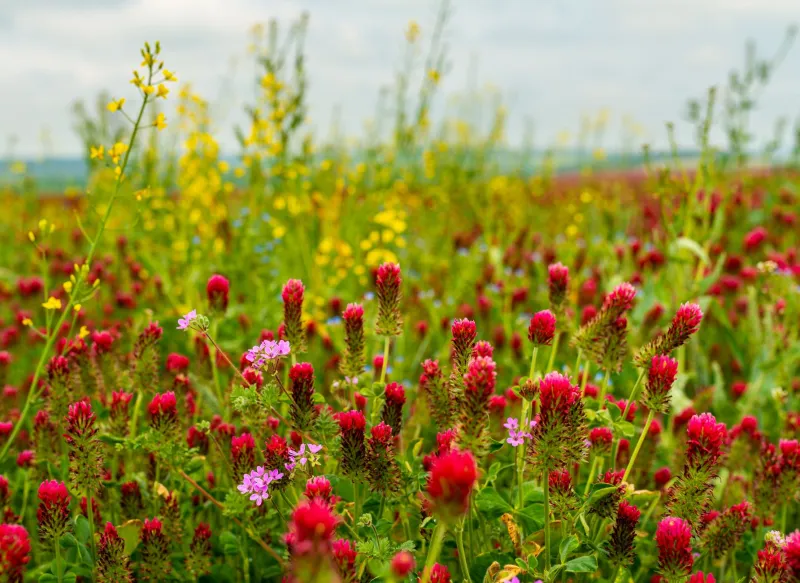
There's a moment every spring when Marcus Webb, a row crop farmer outside Ames, Iowa, watches his neighbors load up on synthetic nitrogen fertilizer. Bags stacked on pallets, price tags climbing with every global supply chain hiccup. Marcus just smiles and checks on his crimson clover.
"I haven't bought a full nitrogen application in three years," he says. "The ground does it for me now."
What Marcus figured out — and what a growing number of American farmers are quietly adopting — is that certain plants are basically free fertilizer factories. They pull nitrogen straight from the air and lock it into the soil. It's not a new trick. It's older than agriculture itself. But after decades of cheap synthetic inputs making everyone forget about it, the nitrogen-fixing cover crop is having a serious comeback.
So What's Actually Happening Underground?
Here's the short science lesson, and it's genuinely cool. Nitrogen makes up about 78% of the air we breathe, but most plants can't use it in that gaseous form. Legumes — think clover, hairy vetch, field peas, and cowpeas — have figured out a workaround. Their roots host colonies of bacteria called Rhizobium, which convert atmospheric nitrogen into ammonium, a form plants can actually absorb.
This process, called biological nitrogen fixation, can deliver anywhere from 50 to over 200 pounds of nitrogen per acre depending on the species, soil conditions, and how long the crop grows. For context, many corn farmers apply 150–200 lbs of synthetic nitrogen per acre at a cost that's been swinging between $500 and $1,000 per acre in recent years. The math starts to look pretty interesting pretty fast.
When the cover crop is terminated — either by mowing, rolling, or light tillage — those nitrogen-rich plant tissues break down and release their stored nutrients directly into the soil profile. You're essentially writing a deposit check to your soil bank.
The Lineup: Which Cover Crops Do What
Not all nitrogen fixers are created equal, and the best choice depends heavily on your region, your cash crop rotation, and your goals.
Hairy Vetch is a workhorse in the Mid-Atlantic and Southeast. It's winter-hardy, aggressive, and can fix 100–150 lbs of nitrogen per acre. It's a favorite before corn in Virginia and the Carolinas.
Crimson Clover thrives across the Southeast and Pacific Coast. It's faster to establish than many alternatives and offers excellent weed suppression as a bonus. Farmers in Georgia and Tennessee have been using it as a standard corn precursor for years.
Field Peas are the go-to in the Northern Plains and Pacific Northwest. They establish quickly in cool conditions and are often mixed with oats or cereal rye for a multi-benefit blend.
Cowpeas dominate in the South and Southwest. Heat-tolerant and drought-resistant, they're ideal for summer cover in Texas, Oklahoma, and the lower Mississippi Valley.
Sunn Hemp is gaining traction in the Southeast and Midwest. It grows fast — up to 6 feet tall in 60 days — and can fix nitrogen at some of the highest rates of any annual legume.
Planting Windows by Region
Timing is everything with cover crops. Plant too late and you won't get enough biomass. Plant at the wrong time and you'll fight establishment.
- Midwest Corn Belt (IA, IL, IN, OH): Seed hairy vetch or crimson clover in late August to mid-September, after soybeans or before winter wheat. Terminate in May ahead of corn planting.
- Southeast (GA, AL, NC, SC): Crimson clover or hairy vetch goes in October through November. Cowpeas work as summer covers between cash crops.
- Northern Plains (ND, SD, MN): Field peas or lentils in April–May, terminated ahead of late-season crops. Brassica mixes add diversity.
- Pacific Coast (CA, OR, WA): Winter covers like bell beans and fava are popular from October through February. Dry summers mean most cover crop work happens in the cool season.
- Southern Plains (TX, OK): Cowpeas or sunn hemp as summer covers, hairy vetch in fall for winter nitrogen banking.
The Real Numbers: What Farmers Are Seeing
Marcus Webb started his cover crop program five years ago on 400 acres. His first year, he cut synthetic nitrogen by 30%. By year three, he was at 60% reduction. Last season, he used only a small "starter" nitrogen application at planting — what agronomists call a pop-up fertilizer — and let his vetch-rye mix do the rest.
"My input costs dropped by about $180 per acre on the nitrogen line alone," he says. "On 400 acres, that's $72,000 I kept in my pocket."
His yield? Flat to slightly up. His soil organic matter? Up 0.4% over five years, which sounds small until you learn that each 0.1% increase in organic matter can hold an additional 20,000 gallons of water per acre.
In Nebraska, a farmer named Deb Sievers runs a diversified operation with cattle and row crops. She uses a cereal rye and hairy vetch blend before corn and reports similar savings — but she also credits the cover crops with reducing her herbicide costs, since the thick biomass smothers early-season weeds.
"It's not just the nitrogen," she says. "It's the whole system getting healthier."
Starting Small Without Losing Sleep
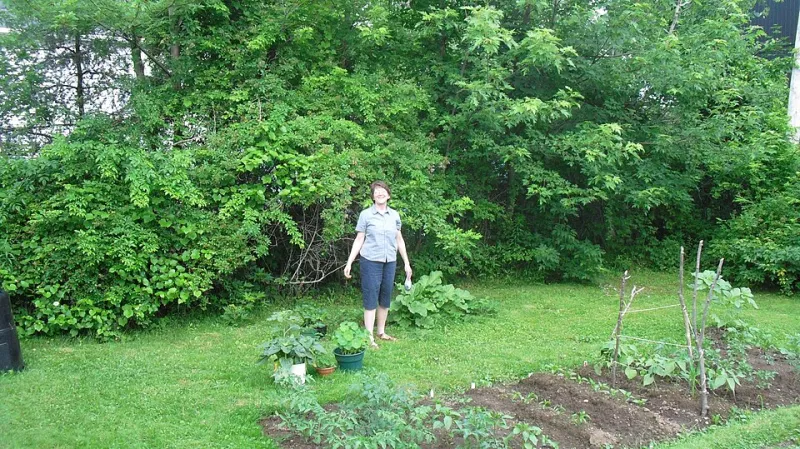
For backyard gardeners and small-scale growers, the principles are exactly the same, just on a more manageable scale. Sow white clover or Austrian winter peas in your vegetable beds after fall harvest. Let them grow through winter and early spring. Turn them under two to three weeks before you want to plant, and you've just fed your soil for free.
If you've never tried cover crops before, start with a single bed or a quarter of your garden. Track what you plant in that section versus a control area. Watch the difference in soil texture, earthworm activity, and plant vigor by midsummer. You'll be a convert.
The industrial farming model told us for decades that fertility came from a bag. Turns out it was always in the air — and in the roots of a little red clover. Marcus Webb figured that out. Your garden can too.